
Paradox of Privacy and Personality Masking vs. Poor Boundaries
SHOW NOTES
How do you protect your privacy without becoming fake, and stay authentic without oversharing? In this episode I dig into what I call the paradox of privacy: the tension between your absolute right to keep parts of your life to yourself and the loneliness that creeps in when you start hiding who you really are.
I normalize why we all mask, especially in spaces where we feel unsafe or where we already stick out, and then I get into the trap of chronic masking, where you end up feeling unknown and isolated.
Here's the surprising part: oversharing and masking are actually the same behavior, two sides of one coin, both attempts to force closeness rather than let it grow naturally. The real freedom comes from owning your quirks and flaws first, so you can give yourself the acceptance you've been fishing for elsewhere, and land on the winning combination of healthy boundaries plus authenticity.
I'll even use a Community episode about a shameless carny to show you what total self-security looks like, and why you don't need a piece of metal in your brain to get there.
Warmly,
Linda
💖 For comprehensive support from a licensed therapist, reach out to me through:
Meet Your Host!
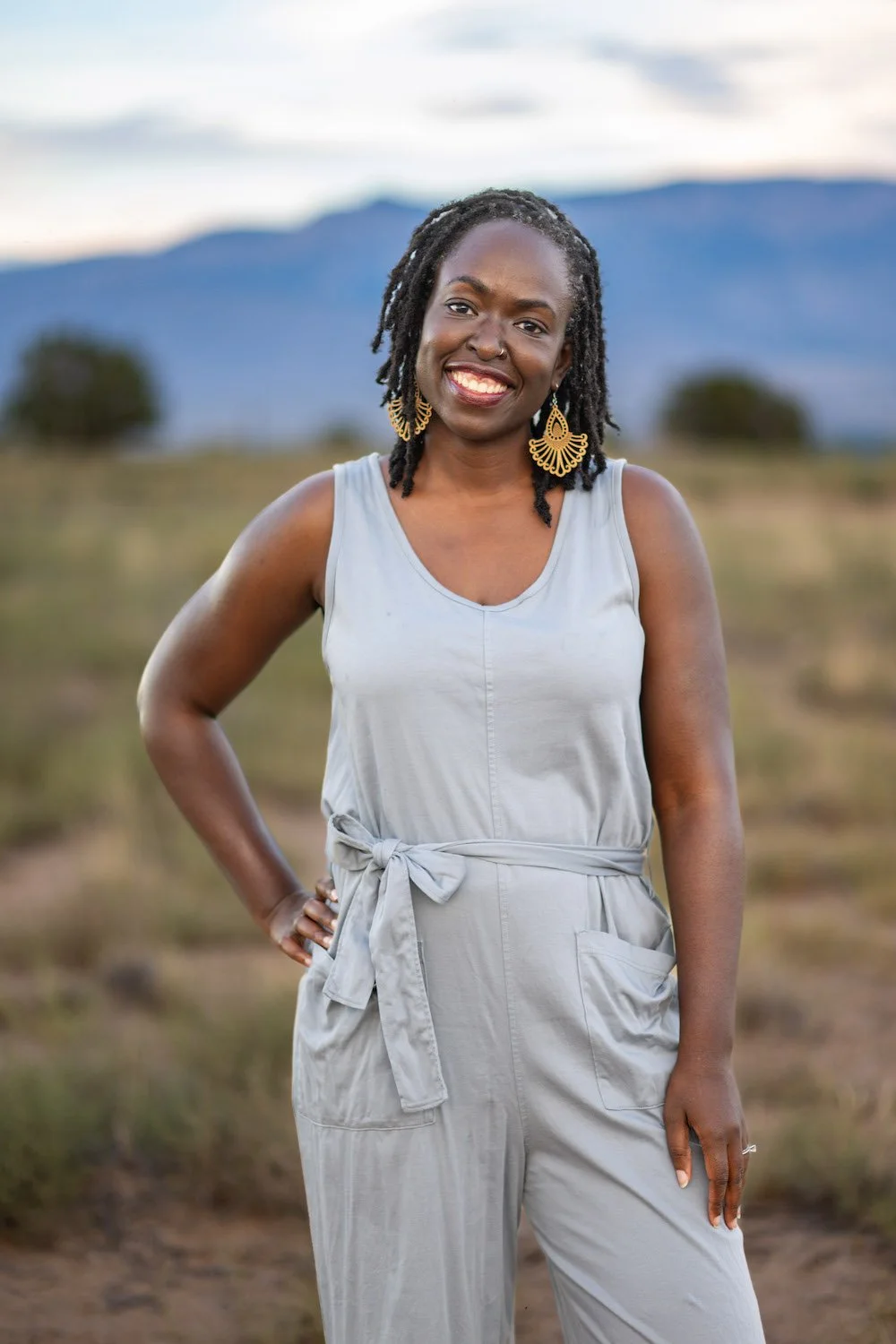
Linda Sanderville, LCSW, RYT-200 is the founder of Satya Counseling & Yoga LLC. She specializes in concierge therapy for female founders and public figures, helping high-profile women navigate public scandal, executive burnout, and the values that will define the second half of life. Based in Albuquerque and serving clients virtually in DC, Maryland, Virginia, and beyond, Linda combines clinical expertise with somatic wisdom to help leaders reclaim their truth.
Read below for full transcript.
[00:00] Intro & The Paradox of Privacy
Hi, I'm Linda, emotion coach and hypnotherapist, who also loves a good sunrise yoga class, listening to the belly laughs of my baby boys, and hunting down the best vegan donuts. This podcast is for ambitious and high-performing women who want to feel fulfilled in all areas of their life. I'm here to give you practical tips and mindset shifts that will help you put your self-love skills into action. Welcome.
Hey, y'all. This video is talking about the paradox of privacy: finding ways to protect your privacy, but still be authentic and not get into personality masking and being fake. Yeah, let's talk about this.
[00:46] Your Right to Privacy in an Oversharing Age
So generally speaking, not everybody needs to have access to your personal business. You want to keep people out of your personal business. And that's your right as an adult or a teenager or just a person, right? Not everybody needs to know all of your stuff. And of course, we live in an age where it's really easy to kind of blast everything about your life online, or to even feel like you're supposed to be doing that. When in fact, the people who are watching this either just don't need to have the information, or could potentially use it against you. And so it's really important that you feel comfortable with what you're sharing, and that you've made up in your own mind what feels good to you to share, right?
But then on the other hand, if we're engaging in styles of communication, and how we present ourselves, that are really very fake, then we're personality masking. And that's going to lead to other issues.
[01:43] Why We Mask, and When It's Okay
So I wanted to talk about that with you, to normalize, first of all, the fact that we all do this to some extent. We all mask to some extent. And the truth is that when we're hiding aspects of our personality, camouflaging ourselves a bit for social acceptance, there's also the element there of wanting to protect ourselves. And I never want to dishonor that for any of you when we're in a situation where we feel like we need to protect ourselves, because it doesn't feel safe. The person that we're interacting with doesn't make us feel safe, or the situation that we're in.
Maybe it's a professional setting where we feel like we kind of stick out anyway, whether it be for your race or gender or whatever it is. There's times where you may want to kind of hide a little bit or kind of blend in, because you're like, I don't know if I want all that kind of focus. That's not really working for me. I don't feel comfortable with it.
So there's times that we may mask just because we don't feel comfortable. And so if you know that you're doing that in the moment, just acknowledge that for yourself, that that's what I'm doing, you know, and I have my reasons, and it's fine. This is not my normal way of being. But right now I feel like I kind of need to ground myself and feel a little bit more secure.
[03:09] When Masking Becomes a Pattern: Loneliness & Isolation
So this video is not about that. It's not about just doing something to survive the moment. This is really about when you start developing a pattern of personality masking, because it might not feel so good to you, right? The results of just chronically masking are that, well, you're not being true to yourself. And that people have a hard time getting to know the true you, which is not so much about them, but for you, it can leave you feeling pretty isolated and lonely. There's like a physical pain that can go along with that sense of loneliness when you feel like you're not known, that people don't know the real you. That's not a good feeling. And so if you're having that feeling, this video is for you, right?
Also, if you're having the opposite, where you feel like you're very boundaried, but that makes you feel lonely in a different way, this video is also for you. We're trying to find that happy balance where your needs are met for feeling contained and feeling like you have a right to your own privacy, without feeling like you're disconnected from other people or that you're going to be rejected. That's the paradox of privacy, right? You want to keep certain information to yourself, or certain things that are going on in your life to yourself, or certain goals that you're working on.
Sometimes people who are in business, like if you're in the middle of a new project or really taking a big leap into something brand new, you might want to kind of play your cards close to your chest because it's not ready for everybody's eyes yet. And that's totally fine. It doesn't have to be ready for everybody's eyes all the time. That's not necessary.
[04:53] Authenticity: Owning Your Quirks and Flaws First
So when we're talking about personality masking, back to that, the opposite of that would obviously be authenticity, right? We tend to think of authenticity as being true to ourselves and our personality and our character, no matter what situation we're in. It doesn't really matter so much. Of course, if we're in certain settings, like we're at the big family event with people we haven't seen in like 10 years, we may not put all of our personality out there, you know, and that's fine. We're still filling out, like, what are my cousins like these days? You're trying to feel it out. If you're in a networking event, the same thing, where you're going to do it in stages, right? And that's fine.
But generally speaking, to get to that place of healthy authenticity, it's best to start with owning your quirks and your flaws and the things that make you you yourself. You have to own that first. You have to practice that acceptance towards yourself first. And what that does is, it gives you that freedom to decide when you want to come out more, right? When you want your personality to shine out a little bit more, you can do that easily and comfortably because you don't internally judge yourself or feel ashamed for who you are. So that's the beauty of authenticity: that you can have that power to give yourself that acceptance without needing to have acceptance from someone else in order to bring out your whole personality.
This allows you the freedom to differentiate yourself from everyone else, because we're all different in some way. We have a lot of overlap. We're all different in some way. And this allows you the freedom to differentiate because you don't feel the pressure to people please, just to people please, right? When you find that you have that room to be authentic, the great thing is that it also lets people around you be more authentic with you, at least in your presence, because they get the sense that, you're fine, you're not expecting them to be a certain kind of way. And you've given yourself that freedom, and you're good with them having that freedom too.
And this makes life a lot more interesting when you are around people and you let them just be who they are, because you yourself are comfortable with being who you are. It makes life so much more interesting because you get to see what they really think, how they really respond to things, what's important to them, what they value, what they think is funny, what they think is interesting or beautiful or whatever. And that just makes life so much more interesting than when we're all trying to pretend like we all agree with each other, like we're all the same person. Who wants that? It's so boring. And it's just dumb.
[07:44] Oversharing and Masking Are Two Sides of the Same Coin
So anyway, the privacy paradox is finding ways to keep your privacy without pushing others away or feeling lonely and disconnected. You still want to feel like you belong, right? You still want to be in community. The struggle is that some of us, I would argue most folks, and I think extroverts tend towards this a little bit more now, and I know extroverts and introverts are a little bit kind of made-up categories, we won't talk about that today, but anyway, people who are more socially outgoing can kind of move into this extreme a little bit more easily, where they actually have poor boundaries, okay? Poor boundaries where they're oversharing, telling all the things, in order to develop a sense of closeness with someone.
And here's the funny thing: when we're masking, when we're masking our personality and pretending to be something that we're not, when we're camouflaging our personality, and when we're having poor boundaries, oversharing, all of that, we're actually doing the same thing. It's just two opposite sides of the same coin. The sharing may seem more authentic. People are like, wow, they're so open, they're so real, you know. And they kind of keep on going, give us more details, more juicy details about how you messed up and how your life is crazy.
But really, the oversharing and the masking are the same thing. You're attempting to bridge the gaps in your relationships, or the feeling of belonging in a group. You're trying to do that quickly. You're trying to control that feeling of belonging. And you're doing that without allowing it to develop naturally.
So with masking, you're pretending in order to get that acceptance, pretending to be more like the person that you're in front of so that they will accept you more easily, because you don't think they will accept you if you were just you. So you're trying to create closeness in a forced way. When you're sharing too much and having poor boundaries about what you're sharing, you're also trying to close that gap of closeness really quickly without allowing the relationship to develop naturally. Do you see how that works there?
So the issue with the poor boundaries part of it is that you oftentimes end up there because you have fallen out of practice with loving yourself really well. And you're kind of seeking to get that sense of love and worthiness from the reactions of other people. So you're trying to replace something that really needs to come from within you, externally, through other people who will never be able to fill you up enough. That's the problem. You might get them to accept you from all the things that you share, that you may or may not be comfortable with actually telling them, but it'll never really fill you up enough, because that's not how you're going to get that feeling.
[10:58] The Winning Combination: Healthy Boundaries Plus Authenticity
So ultimately, the most powerful combination is to have healthy boundaries, right, keeping things that are for you just for you. Mixing the healthy boundaries with authenticity, being true to who you are, to some degree to where it's appropriate, but being mostly true to who you are, no matter where you are. This means that you are respecting your own right to privacy, whatever that means for you. And then you also don't feel the need to pressure other people to share or attach to you very quickly when that's not comfortable for them, right? When that's not their speed.
And so when you're able to be more authentic, have the boundaries, then you again are making space for other people to do that thing too. Not to mention, when you have that nice, healthy mix, you actually develop this air of being self-secure and confident that other people will envy, and then hopefully also eventually ask you about, so you can share your secrets with them about why you are that way.
Right. So I don't want you to continue to feel like when you want to keep things private or keep things to yourself, that you're not being authentic enough or real enough. You are allowed to have your own boundaries placed where it feels comfortable for you. You don't have to share more than is comfortable for you to share or to give out to other people. That's for you to decide. No one can decide that for you.
Also, at times when you feel like you are pretending a little bit because you feel unsafe and you need to have sort of a safety blanket of managing how you're perceived, because you're in a situation that doesn't feel so comfortable for you, you're also doing what you need to do. And that's okay. We're just finding that middle ground that we can be in most of the time, so that we can have that sense of connection to others without it being forced.
[13:06] The Community Example: Blade, the Carny With No Shame
I want to give an example, as we get ready to close this video. I want to give you an example of what it looks like when someone is just very, very secure with themselves, and how it can make other people feel kind of crazy. I don't know if any of you listening or watching to this are fans of the show Community with, oh, I just forgot their name. Doesn't matter. But I find it really funny. I think it's kind of a hilarious show. And there's one episode where one of the main girl characters has told one of the guy characters about this man that she always tends to fall head over heels for, even though he's really unhealthy for her. And he goes crazy trying to figure out, what is it about this guy? Because he goes to the carnival where he works. He's a carny.
And he's watching this guy. This guy is very average-looking, maybe a little less than average-looking for most folks. He's just working some booths. Very simple guy. And he's driving the guy character really crazy. The carny's name was Blade, by the way. And he's like, Blade, he's just so frustrated. Why is she so hung up on him? Why does he make her crazy? And how can he do that to women? I mean, it's problematic in other ways. But yes, he's trying to figure out the secret.
And near the end of the episode, we find out that the guy's secret is actually that not only does he not care, like, he's very self-assured because he doesn't care about offending anyone or anything like that, but the reason he doesn't care is because he has a piece of metal embedded in his brain. He had some crazy accident. And the piece of metal got left behind. And it just changed the part of him that cares about what anyone thinks about him. And so he has no shame. So that's the secret. He had no shame.
Now, I don't think you have to be that extreme to feel comfortable and secure in your own body and mind and in your own life. That's a whole other level. And that's not something that I even would advocate, right? Like, it was a disability, it was an accident. We don't have to be on that level in order to feel secure in our decisions or find a way to have healthy privacy. We can simply decide that we love ourselves in a way where we can give ourselves that gift whenever, wherever, no matter what, because it's our choice.
[15:46] Choosing Self-Love & Where to Go Next
If you're needing any help with the kind of self-love that allows you to make these kinds of choices, and to be authentic easily and naturally, be sure to go to the link in my description box and check out my course, the Self-Love Skills course. It talks about a lot of things that allow you to do this very naturally and to feel comfortable and confident doing it, so that you're no longer caught up in that hamster wheel of trying to please other people, or guess what they want from you, and try to fake it till you make it when it's not even necessary.
All right. I've enjoyed talking with you. I'm going to take some time to get on my yoga mat now. So have a great day. Bye.
You hung with me to the end, my shero. If you benefited from this episode, please say thanks by leaving a wonderful review. It helps me know what's helping you the most and allows more like-minded women to find and learn from this podcast. We don't want to keep all the good stuff for ourselves. See you next time.
[Editing Note: The Self Love Skills and Relationship courses are not currently available. If you are interested in this content and guidance, all tools mentioned are now exclusively provided through my concierge psychotherapy practice, Satya Counseling & Yoga.]
Interested in Working with an Internal Family Systems Therapist who supports Public Figures in Richmond, VA, Bethesda, MD or Albuquerque, NM?
Is the inability to rest or slow down leading to burnout in your professional and personal life? Reclaim your joy and vitality while managing your professional commitments through holistic and evidence based counseling. Our specialized support at Satya Counseling & Yoga is designed to fit seamlessly into your busy life, empowering you to conquer trauma-based responses and thrive. Prioritize your mental well-being – embark on a transformative journey towards a happier and more fulfilling life by following these three steps to get started:
Schedule a complimentary 15-minute call to see if we’ll be the right fit.
Begin meeting with me, therapist and trauma-informed yoga teacher, Linda Sanderville, to rediscover your healthy, authentic self.
Start moving forward in your personal and professional life in a positive and healthy way!