
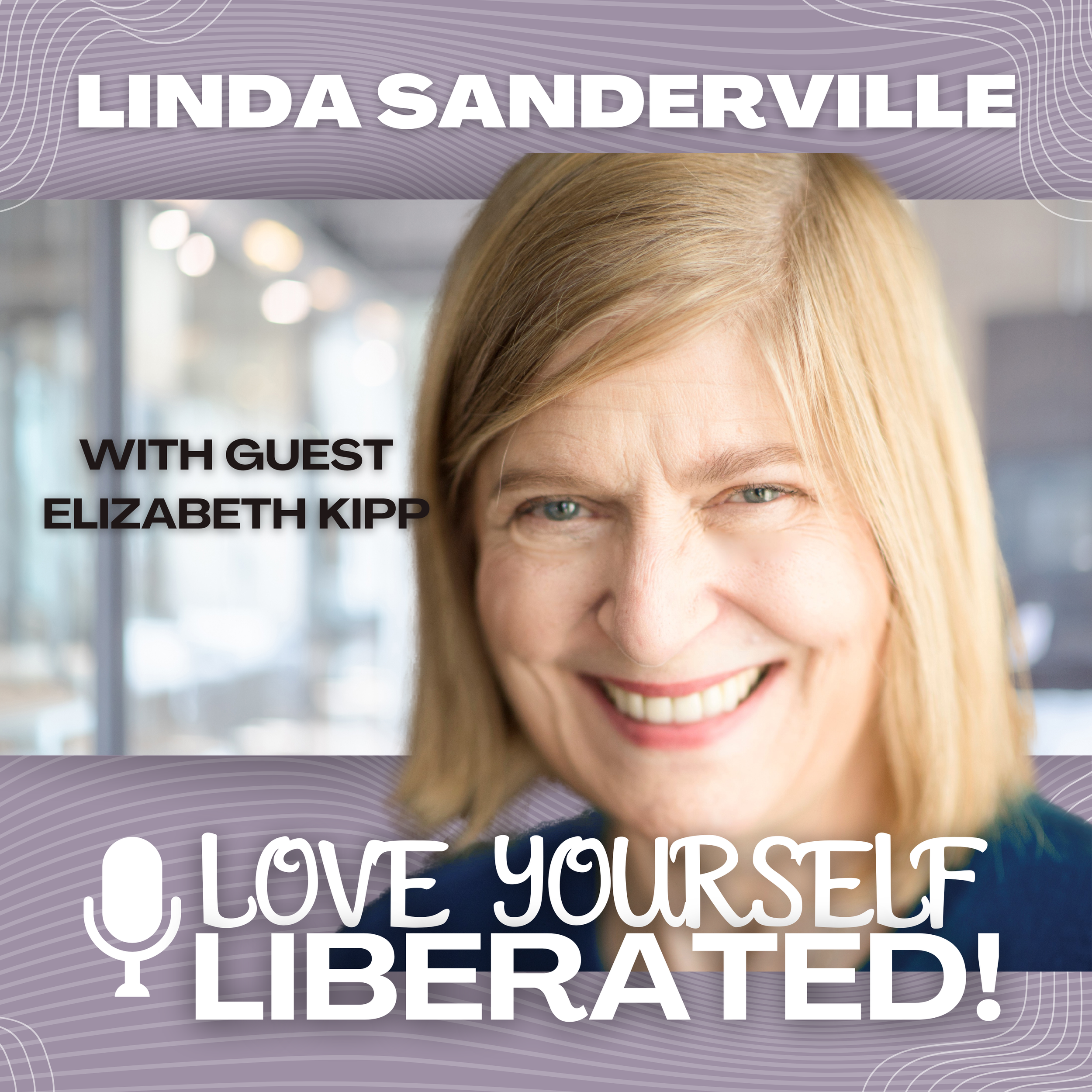
S1:E29 Liberation through Ancestral Clearing! With guest Elizabeth Kipp
SHOW NOTES
The resistance you are experiencing in your search for liberation, is simply a sign. A sign that something exciting is happening, that you are changing the patterns in the brain that were previously getting in the way of what you truly wanted.
Join us to hear how the highs and lows of life can all be navigated in service of the life you desire to create for yourself. Discover how knowing the process of mindset change and the power of ancestral healing can unlock your true, best path forward!
Warmly,
Linda
👍🏿If you enjoy the show, do me a favor and leave a review so that more people can find and benefit from the show.
Episode Timeline
3:00 Elizabeth's personal history that brought her to the holistic stress management work that she does
10:00 Peter Prescott on chronic pain class. “Don’t judge the moment.” “What are you doing to contribute to your pain?”
14:22 Introduction to ancestral clearing work
19:20 Learning that pain is information, pain is currency
26:20 The evolutionary advantage of ancestral information getting passed down. Examples of disease resistance, gratitude and determination to solve problems
29:29 Ancestral burdens of self esteem issues
33:05 Role of ancestral clearing in chronic pain
36:48 Live Ancestral Clearing experience from Elizabeth
43:05 Elizabeth’s final words of encouragement on the process of change and the role of our personal power
➡️ To hear more expert presentations like this one, email to request on-demand access at admin@lindasanderville.com
Elizabeth's Offer to podcast listeners: 5 Ways to Relieve Stress, Anxiety, & Fear https://bit.ly/5WaysToRelieveStress Five Ways to Relieve Stress Suffering from stress, anxiety, and fear in your life can lead to chronic pain. But it doesn’t have to be that way!
https://www.facebook.com/ElizabethKippStressManagement/
💖 For comprehensive support from a licensed therapist, reach out to me through
Meet Your Host!
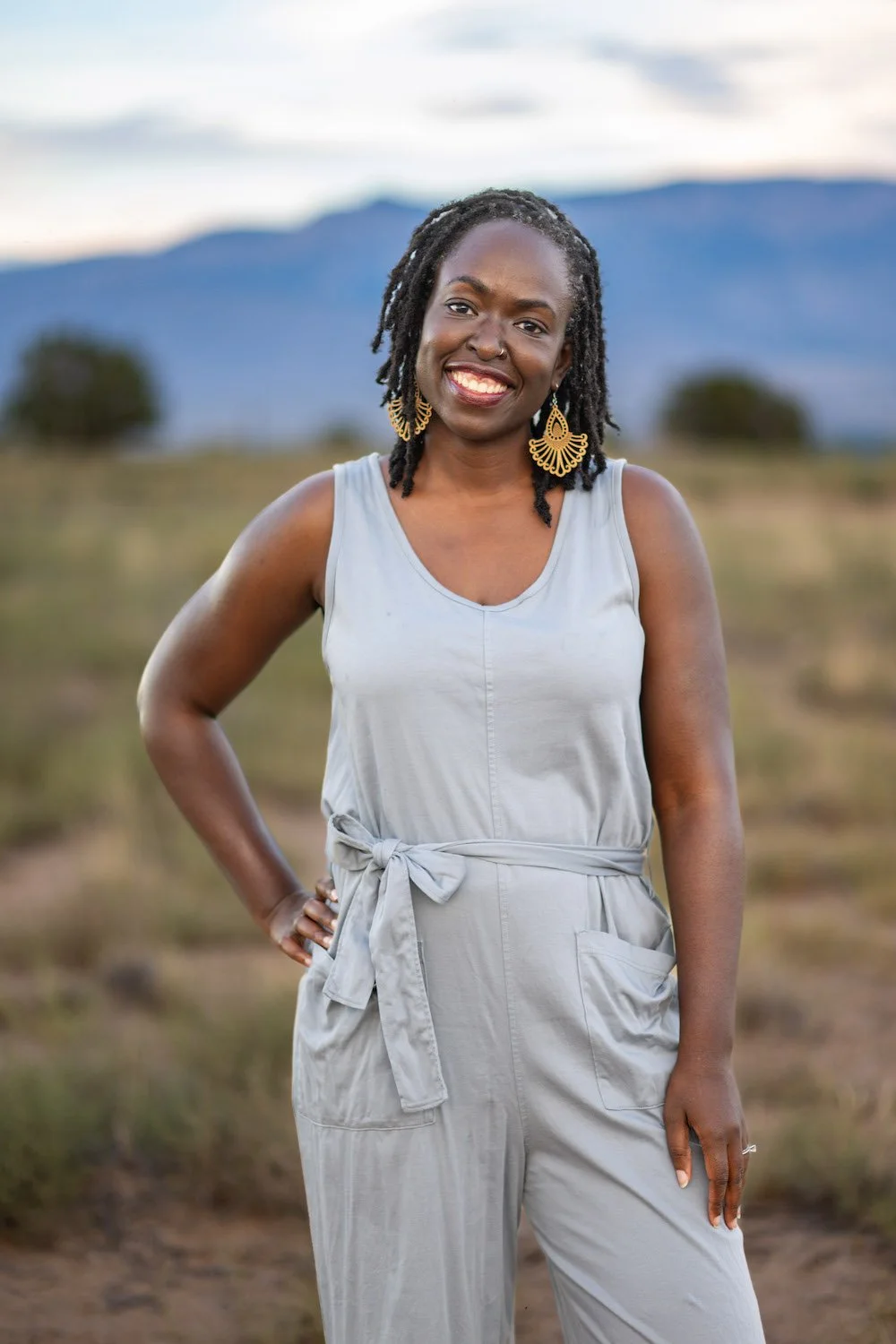
Linda Sanderville, LCSW, RYT-200 is the founder of Satya Counseling & Yoga LLC. She specializes in concierge therapy for female founders and public figures, helping high-profile women navigate public scandal, executive burnout, and the values that will define the second half of life. Based in Albuquerque and serving clients virtually in DC, Maryland, Virginia, and beyond, Linda combines clinical expertise with somatic wisdom to help leaders reclaim their truth.
Read below for full transcript.
Intro by Linda: Hi, I'm Linda, self-love coach and hypnotherapist who loves a good yoga class in my pajamas, listening to the belly laughs of my baby boys, and hunting down the best vegan donuts. This podcast is for ambitious and soulful women who want to feel fulfilled in all areas of their life and are ready to dive deep into the mysteries and wonders of the subconscious mind in order to achieve that. So if you are ready to be let loose from the shackles of self-sabotage and design a life of emotional freedom and everyday abundance, you are in the perfect place. Because life can get even better than you imagine, and the biggest shifts start inside of you. Welcome.
Linda: Welcome back to the channel. I am Linda Sanderville, the host of Love Yourself Liberated. And I'm here with Elizabeth Kipp. She is one of my favorite speakers. I had her actually just last year on a summit that I organized for reclaiming our joy. And I wanted to bring her back here for this opening episode of season two of Love Yourself Liberated, because I really do believe that what she has to share is so powerful and so refreshing. And I think that she will really connect to you if you are a follower of this channel or resonate with what we discuss here as far as finding liberation through your personal choices, engaging in ways to enrich your life and not be so weighed down by the difficult things that life can often bring. I think that you all love Elizabeth too.
So today we're going to be talking about how the resistance that you experience in your search for greater freedom or joy in your life is often just a sign. That something is changing, right? That change is available, that there are patterns in your brain that are shifting, that there are patterns in your life and in your relationships that are shifting. And so that resistance that you feel, that feeling of like, oh, why is this like difficult? Why do I feel like I'm getting stuck? That can often actually just be a sign that you are headed in the right direction. There just may be some things that need to clear a little bit, kind of clear out of your way so that you can navigate those highs and lows and still design the kind of life that you desire for yourself, for those around you, and hopefully to a degree that actually impacts more and more people in the world. We know that we are in a world that is suffering quite a bit, and any more love and joy and support and community that we can put out there will be appreciated and is very much needed. Elizabeth, could you please just give a brief introduction of yourself and your work for our listeners and our viewers?
Elizabeth: Sure. Thank you so much, Linda. It's so great to be with you again. And I'm going to really be enjoying sharing your channel, continuing to share your channel with my listeners, right? So I'm a stress management and historical trauma specialist. Trauma-trained and yoga-informed addiction recovery coach and ancestral clearing practitioner. That sounds like a lot of hats, but it's really all under stress management. It's like there's stress. How do you want to manage it? Well, these are the tools that I use because they're the tools that work for me. So I teach them.
Linda: Right. Beautiful. And I love that holistic catalog of tools that you have. That's very much the way that I roll as well. I think that's why we resonate so well together. So Elizabeth, could you share a little bit of maybe part of your own journey that you feel led to talk about today in regards to finding your own personal liberation and some of the paths that you took to get there?
Elizabeth: Sure. I was raised in a family where we had lots of resources. All kinds of physical resources, education, food, house, fresh water, all that stuff. And my parents really, from this point of view, at this end, my parents really were suffering from the trauma, PTSD from World War II. And they just, you know, they used alcohol too. My mother was, she was undiagnosed bipolar and untreated bipolar disorder and had a chronic pain problem and didn't do well with medication. So she just used alcohol and she just had a very fiery, unpredictable demeanor. So that was something to deal with.
Elizabeth: The other thing was is that I remember, just to put the ancestral spin on it, I remember being about four years old and sitting in the living room, and I had this awareness of being in a family that had a lot of violence in it. And I didn't really understand that at that age, but I felt it. And I was in this space and I was like, what am I doing in this family? Like, it was like that. And there's no one that I could talk to about it. And, you know, I didn't even know how to even explain my experience, but it was, it left an imprint. Right. And it wasn't really until, you know, late adulthood really that I, when I got into the ancestral clearing work that I understood what that experience was and then was able to like actually release the burden of it. Cause I actually felt it and I didn't know what to do with it.
Right. So anyway, I had, I have a background of chronic pain emotionally. And also physically. And I had an accident when I was 14. I broke a vertebra low in my back and it broke in two and the front part slipped forward. That's the fifth lumbar, which is a, that's a, anyway, that's a scary bone to break. And I ended up having a lot of surgery in later years. And every time I had surgery to stabilize that slip, the pain got worse. So I ended up in chronic pain for really 40 years of chronic pain. 31 of it, I was in the medicals, the Western medical system for the most part. They don't really know how to treat chronic pain with anything other than opiates and benzodiazepines, which is an anti-anxiety medication. So that was their answer. And I fortunately had acupuncture. I had a yoga teacher that kept me kind of yin yoga kind of work that would keep me limber. I had some Reiki. I said acupuncture, massage, yoga. And of course, I had a meditation practice. I started meditating in the mid 70s. So I had that as a and I really feel that I never would have gotten through those long years of all that pain and struggle and everything if I hadn't had a meditation practice. So that being able to be present no matter what was happening was very helpful for me.
Elizabeth: So for me, just to give you a description of what I'm talking about being lost in that struggle. And at the times when things got really, really like the most challenging, I really felt like I was on a tightrope. And if I slip to the left, I go crazy. And if I because I crazy in my family. And if I went to the right, I have a heart attack and I die from the stress. So that's that's the landscape that the mind created. And my meditation practice helped me stay present in this moment, and not, you know, not get caught by the worry of the mind. Oh, I'm gonna freak out, or I'm gonna go crazy. Oh, I'm gonna have a hard— that the meditation was what got me through that. So that's a very powerful tool that I that I'd like to just kind of underscore for the and a lot of people say, Oh, I can't meditate. And I'm like, Yeah, well, okay. Part of meditation is understanding the mind's like, I don't want to sit here and do this. Well, it doesn't matter. You just keep coming back. And the mind pulls your attention away and you go, oh, I'm supposed to be meditating. And you just come back. And it's that simple. And that's, you know, that's where we start.
So anyway, that's so I got better. I found a doctor that was able to really understood the nature of chronic pain and was able to detox me off all those medications and put me in a, and I went into his pain management program. He left us this book, Conquer Chronic Pain: An Innovative Mind Body Approach. Dr. Peter Geach, he passed away in 2016. I think it was 2017, but he left us this beautiful book. So he really understood the nature of chronic pain and he, and he helped me through it.
Elizabeth: And, two of the things, because this is kind of some of this is about mindset. Two of the things that helped me the most when the first like five minutes of being in his class classroom, when I finally kind of got well enough to be in his classroom, he said, he said, don't judge the moment. And I'm sitting there and I'm in my head. I had to say it out loud. I said to myself, I'm not judging anything. I'm just sitting here minding my own business. So you can see the defenses went up right away. And I'm sitting in a room full of 20 strangers, but they all have this chronic pain thing happening, right? And the second thing he says was, what are you doing to contribute to your pain? And I was like, I can't believe he just said that in this room. Like, is he asking to get killed? Because, you know, those are fighting words. How insulting, yeah. That's the first thing that I said in my head. I didn't say it out loud. I could have. I didn't.
You know what? That was such a powerful question because I had that attitude. Boom, right? Don't mess with me, you know. And the pain's doing to me. I'm not doing anything. That was the mindset. And then I stopped just long enough and I realized that he had just asked a very powerful question. What are you doing to contribute to your pain? You know what's buried in that question? The answer, which is like, it's possible that I actually have some power here. Whereas when I walked into that classroom and for all those years that I had chronic pain, I thought the pain was doing it to me. And I did not realize that I had any power in that space. And so my journey, you talk about resistance, my journey was to struggle with the pain. And man, I can fight and fight and fight and meet it and meet it and struggle and struggle. And you know what? That just makes me suffer. I just did it for a long time. Until I found another answer. I just kept looking for another answer. But, you know, it was right in front of my nose the whole time.
Elizabeth: So what are you doing to contribute to your pain? And then don't judge the moment. So what did he mean by don't judge the moment? He meant he was talking about our pain. And I have been judging my pain as bad my whole life. And that right there is going to cause suffering. That's part of the resistance, right? So that's a, and anyway, that was so powerful for me. And I was just so blown away by that. And I healed so quickly. I walked into that program, four years of chronic pain. And 52 days later, I walked out with no pain and it, he had a 94% success rate. So it wasn't like there was something special with me. He had a, he had a, he had, so he was onto something.
And I, and so I, when I got out of, out of the program and got my sea legs in my recovery, I did everything I could to you know build a platform and start teaching the tools that he taught us. Yeah, part of the tools that he taught us was he had an ancestral clearing practitioner in there, John Newton of Health Beyond Belief dot com, who brought in the ancestral work and that was very powerful. And I was so impressed with that I was like, oh my god, I was like what happened in this room? I was so impressed and I wanted to know because I had my science hat on when I was experiencing it. I was like, is this repeatable? And, you know, can you measure it? And does he teach it? And he does teach it. So that's really the nutshell in a nutshell, the background of where I am today. I did have to overcome a self-esteem issue in order to step into the online space. And then I had to keep working at that, you know, in order to really put myself out there and, and, and feel like, and not just put myself out there, but actually feel like I belonged in the space. Right.
Linda: Yeah. Thank you so much for that. You said so much that I feel bears emphasizing. You know, for my listeners and viewers, I have been on an extended hiatus. And Elizabeth's already aware of this because I lost my mother about six months ago. And it was quite surprising. It wasn't anything expected. And, you know, there's just different pieces of your story that I externally relate to, even from just very recent times, let alone, you know, my childhood as well and things like that.
But when you talk about, for one, the meditation practice. I am certainly one who feels all the resistance in my body and in my mind when I'm sitting to meditate. And yet it has been so helpful for me to return to that practice, just even in recent weeks, to just sit and be. There's something about it. There's just, I mean, we know scientifically that it works, right? I mean, there's so much research that's been done, even by folks who kind of are, you know, they're taught to be incredibly suspicious, right? Things that are not medication or pills, right? You, myself, yeah. And yet, you know, we know that it works. That's why there's so many meditation programs. That's why it's used even in hospital settings for cancer recovery, because we know that there's something incredibly effective about stress reduction and even increasing our immunity, increasing our physical health as a result of meditation. And it does get you through some really challenging things. There's something about being able to sit with yourself, to sit in the fullness of who you are, who we are as beings who are so full of worth and capacity and beauty. There's something about just sitting and being in that space, even if it feels imperfect or kind of crunchy or kind of awkward. And feeling more consolidated, right? Just more solid within ourselves, more grounded. There's just a little bit of an increase in that grounding for the remaining part of the day. It's a lot easier to kind of pause and take in information as you go throughout the day rather than just react.
Linda: So all of that is so powerful. When you think about, gosh, just being able to learn how to pause before you respond to something. I mean, how many different aspects of our life does that affect, right? So thank you for bringing that up. Thank you also for discussing this idea. And I think this is really important of how we judge pain as bad. And it's such a hard one, right? It's really hard. It's sort of like the question that Peter asked you of, you know, what are you doing to contribute to your pain? It feels insulting. It feels like, how dare you? How can you say that? Yeah. That was my first, what? Yeah, dude. Like I'm walking out of this class. Like I would be feeling really edgy right at that point. Right. And, and it doesn't mean that all suffering that we encounter, I really, I do not believe that, that all suffering that we encounter is somehow our fault or all in our control. But I think what you're saying about the pain, you know, assuming that pain is always bad. There are times where our pain is maybe the only thing that leads us to working through the resistance to change, right? Something is painful enough that it allows us the energy, the motivation, even the desperation to make sure okay I don't want to, you know, either I don't want to encounter this again, maybe this kind of terrible relationship, romantic relationship, or this health situation or this kind of job with this terrible boss, like I do not want to experience this again. And so the pain actually leads us to making major changes and shifts that affect our good for years to come. And in that case, I would say, wow, the pain, while not desirable, and I get it, I don't have a relationship with pain in that way, right? It's not desirable, and yet it can be so foundational, so fundamental for getting us to shift to a completely different way of life that serves us so much better.
Elizabeth: Yeah, pain is information. Yeah, it's information. It's information. And I have one of my teachers, Guru Pran Singh Khalsa, said, says, pain is the currency of transformation. Be careful how you use it.
Linda: Yeah, so those are both two very powerful, what are you doing to contribute to your pain and yes, pain is the currency of transformation, what do you, you know, be careful how you spend it, those are two pretty powerful pillars really of healing in this chronic pain space. And just for the audience, chronic pain is any pain that's felt 15 days out of 30 for three months or more. Physical, mental, emotional, spiritual, doesn't matter. All those things send the same signals to the brain. It hurts. So grief is a chronic pain experience, right? Bad back is chronic pain experience. There's lots of stressful job, not being able to pay the bills for months, right? Those are all, they're all sending these signals to the brain, same signal, it hurts. And the problem with chronic pain versus acute pain, we're used to the body has a stress response, right? And so when we get stressed, we address the stress, stress response, the stress, we get stressed, the stress balance goes on, we address it. The stress response goes off. In the chronic pain experience, the stress response gets stuck in the on position. And so we're in this hyper activated, dysregulated state. It's very caustic to the body. We're not made for this kind of stress, right? We're made for this on off thing. And this is why there's so much work in this field right now around building resilience, because we really are understanding the neurophysiology of all of this. So chronic pain changes the brain in the ways that it makes us dysregulated and we can't think straight and we have an emotional, our emotional center gets accentuated and we have, we already have a little bias towards the negative anyway, like we see something in the environment, no is our first, and that keeps us safe, but in chronic pain that gets accentuated. It's all your fault or I'm, you know, you're bad, I'm bad. And now we've got, we don't just have, you know, whatever started the chronic pain, now we've got a whole complex of behavioral issues that that's just starting to wither away and it's a reflection of the caustic nature of chronic stress.
Yeah, right. So you bring tools that heal those changes. That's why opiates and benzos don't work. Because they're not healing the changes that are happening because of the chronic pain. Right, right. So the issue that created the pain in the first place, and then all the issues you have as a result of the chronic pain being stuck there in your body and mind for so long as well. So can you begin to talk about what is the role that ancestral clearing plays when it comes to helping us with that resistance to a change, right? Even if it's a change that we desire, like how does ancestral clearing come in and help us to actually achieve that possibility?
Elizabeth: Yeah, I would like to just give you a paint the landscape for a few minutes just to kind of give everybody an understanding of what we're working with here. So imagine, imagine that the nested dolls, that the Russian nested doll, remember that's this little doll and the bigger doll and the bigger doll, just like however many dolls, but each one gets bigger, right? So imagine this. Imagine that each of us lives as a nested Russian doll in this way. I'm an individual. I live in a family. Next Russian doll. Next Russian doll out. I live in a neighborhood. Next Russian doll. I live in a culture. Next Russian doll. I live in a country, right? I live on Earth, right? And last Russian doll, I have all the imprints of my ancestry, the energetic, the information that they passed down. I have that as well. So at any given moment, we're working with, take the present moment. In the present moment, I'm working with all those, each of us is living in all those energies. The collective, the single, the collective in the moment and the collective in the past, right? And the lineage. So that's kind of the landscape.
And science has been able to, to measure the effects. Rachel Yehuda is one person, and her team have been amazing at measuring the effects of intergenerational trauma down the line. So spiritual teachers have told us this forever, but the science has finally really been able to measure it the way they measure it. So we have this information. It comes in. And the way I see it from I studied evolutionary biology years ago. And so I'm always looking at trends from that land. That part of me has that perspective on why is this happening? So something keeps kind of showing up in the human population or in our population, like a behavior or a tendency. I'm like, what's the evolutionary advantage of that? I'm always looking at that, right? That's one of the questions that I ask. And so what I see is that ancestral information passes down. And it's not just in humans. It's in organisms generally. It's information that it's like the best bet. Here's the information you need. That's our best guess at what you need to survive in this. You know, in this generation. Right. That's our best guess, because it's, you know, it's probabilities looking at that.
Right. So so just understanding that now we have ancestral influences like resilience, you know, disease resilience. And and well, I came in just as an example, which I feel is completely ancestral because I didn't make it up. I came in with a gift, the gift of gratitude. Like I just, whenever things got crazy at home and they got crazy pretty regularly, you know, I was like, oh, and, oh, this is horrible. And I have a roof over my head and I have food in my belly and I have, you know, friends and whatever. I mean, I just went right there. I took that with me. So I came in with gratitude and I also came in with, with the gift of being able, I'm like a dog with a bone on a problem. I'm just like, that's a thing. I just, I'm going to work that problem until, so I didn't make that up. I didn't go take a class and learn how to do that. It came with the package, right? So those are two examples of, you know, real positive things that have been. I mean, I look back and I thank my ancestors all the time for that stuff. Also, I have the gift of massive curiosity. Right. That's quite a trifecta that I've just described. Right.
So. Right. And I also came in with the burdens. Right. I came in with with a feeling. I mean, I told you I carried this burden around the family and this and this. What is this thing? And I felt the weight of it. And and I also had self-esteem issues and I had people pleasing issues. And I had some of those were as a result of my immediate environment. But some of that was you can look back in the family and you can see that. I happen to have the blessing of we have actually we have some information for about 12 generations in my family. And we have documented information for that's fairly personal for about nine generations. Just kind of so I've had a chance to kind of go back and, oh, look at this and this and this.
Right. So ancestral clearing is a process. It's a trademarked and registered process that was developed by Howard Wills and then later further developed by John Newton of Health Beyond Belief, as I said, and he teaches it. I'm one of his practitioners. It's actually a process where we ask the source of all that is, consciousness, whatever God, whatever you want to call that that made this, we ask it to help us release that which no longer serves us.
I was, as a scientist, when I first, you know, was exposed to this, I had no idea what was coming. I didn't have any idea of its power. And I just wrote, I just did what he told me to do. And I felt I hadn't had the experience. I was like, what? I was like so surprised. So that just tells you kind of my perspective at the time. And so it was helpful in helping me release these worries and kind of negative imprints that I was born with and that I picked up, you know, were further emphasized when I grew up. You know, part of it was the whole thing about being a woman and, you know, the whole thing. Can I have power? No, I can have power over here, but not over there. And not really. And that was a whole thing. And I have two, my grandmother and my great grandmother were both suffragettes. So that's kind of interesting that that struggle was very evident in me. I'm sure I answered your question, but that's an answer.
Linda: Yeah, yeah. So that's how you've used the model of ancestral clearing from Howard Wills and what was the other one's name again?
Elizabeth: John Newton.
Linda: Yeah. John Newton. Yeah. That's how you've used those tools to help clear with like the self-esteem, with that feeling of being on that tightrope that you mentioned earlier between crazy and dying of a stress heart attack. And so those were the things along with the chronic pain. So how does clearing, like the ancestral clearing, relate to your ability to move through the resistance of defensiveness of 40 years of experiencing pain to then suddenly being pain-free? How does that happen?
Elizabeth: Well, God, what a question. Because I've been in this work now for 10 and a half years. That piece that I told you about the weight of my family, I didn't clear that in Peter's class with John. Then I cleared it later. So these things come off. And for me, they've come off in layers. And I've been in this work all that time. I not only do the work, but I'm in the work. So we do carry a lot. I can't really explain it because we're asking. You're kind of asking me, what is chocolate? Like, how does chocolate, you know, how does chocolate give you the experience it does? You know, and I can get all sciencey and stuff, but it doesn't really answer the question. I just know that John worked the process. He showed us how to work it. And it's just a simple prayer. It's really a very specific prayer. We ask. Creator, God, whatever you want to call that energy, you don't even have to believe in it or have a name for it in order for it to work, which I think is amazing. You only need to want the help, and we get it. And so you ask, and I can give you just a short, the listeners just a short example of this, but they have an experience. But what we're doing is we're asking Creator to help us and our ancestors release that which no longer serves us. And we do it with humility and gratitude. And we use the word forgive to mean we're offering up that which no longer serves us. Now, we're not asking creator to remove anything. We're asking creator to help us release and let go. So it's a little bit different, but I want to make sure that you get the understanding. And we really anyway, it's very powerful. And I'd love to give you an example of how it works. There's like 30 different ways we can get at the burden in a session. But there's this one way is pretty is pretty conducive to a podcast.
Linda: Sure. Yeah, I'd love to. I think just with some of the time we have left doing doing that exact thing. And, you know, I love what you mentioned about like you don't even have to believe in it, it works. You know, I myself, I do believe in God. And it actually makes sense to me what you're saying, though, because, you know, I believe in a loving God, you know, and so it's like, if someone is sitting there saying, I am willing to receive help, can you please help me do this thing that is causing so much suffering? It makes sense to me that God would be like, yes, of course, we get an answer. Yeah, that you'd get an answer.
Elizabeth: Exactly.
Linda: So anyway, please, please do proceed and give our listeners a little bit of that experience.
Elizabeth: I sure will. So everyone listening, if you could just notice the sensations that you're feeling in the body right now. Just like I feel my sitting bones on the chair and my feet on the floor. And I have a little bit of sensation on the right side of my scalp and a little bit under my chin and just like that. And just notice the number from zero to 10 as far as the intensity of those sensations like all together. And just let these words pass over you as you stay present in the breath and to those sensations.
Creator, all that you are, we ask humbly and gratefully for us and all our relationships and all our ancestors and all of their relationships throughout all space, time, dimension, realms, lifetimes, and incarnations, for anything that led up to or arose from a sense of separation from one another or you, Creator, and for all we made it mean, all the insecurity and sense of estrangement that followed, all the letdown because of it, and anytime anyone felt the effects of these issues in the womb, please help us all to forgive one another and forgive ourselves, please and thank you.
For any time we had a fear of being hunted and persecuted, especially for being with beings with strong conviction and intrinsic power, for difficulty with bonding, bonding with others, for giving away our power to others, people-pleasing, bullying, self-punishment, or self-sabotage. Please help us all to forgive and release each other and ourselves. Please and thank you.
For any time we experience stress around keeping secrets or feared secrets. For prejudice and the fear of it, for any time we had difficulty accessing joy, weren't able to let love in or allow ourselves to open our hearts, any time we felt disconnected from our true nature, and for any time we felt a sense of hopelessness and for any dark night of the soul experiences. Please help us all to forgive and release one another and forgive and release ourselves. Find peace with one another and find peace with ourselves. Please and thank you.
For those times we didn't feel safe to go beyond the rules. For invisibility wounds, overachiever energy, the experience of bullying and any aspect of resentment. For all avoidant behavior, feeling like we needed to hide behind a mask, and for any martyrdom in the lineage. For any time we felt or were told or shown that we didn't have value, we didn't matter, or weren't worthy. Please help us all to forgive one another and forgive ourselves, please, and thank you.
For any time we believed, felt, or were shown we weren't enough, for the times we couldn't find enough resources to go around for everyone, for the times we felt a lack of safety and connection, for lack of confidence, a lack of space for our feelings or words to be expressed, couldn't find the motivation to go on. For any experiences of being shunned, banished, deported, or transported from each other or the homeland. For any time we felt we didn't deserve love of the creator or felt the creator turned his back on us. And for any time we lacked an understanding or a sense of our true nature, please help us all to forgive and release one another. Forgive and release ourselves for all that happened, no matter what it was. Please and thank you.
Please help us reclaim all of who we are, our sense of unity and oneness, and live with our hearts open, tender and burning in the brilliance of love. Please and thank you. Please and thank you. Please and thank you. And just take a nice big breath in and let it out and notice how that feels now.
Linda: So I'm noticing a pretty significant reduction in the sensations I was having when you asked us to look at, you know, the sensations we're having around our body. And score that, yeah, it's gone down probably about four or five points for me personally. So thank you for offering that. I appreciate that.
Elizabeth: You're welcome. It's nice to have a taste. And I felt that in the whole room. It was so interesting. Like everybody was reporting the first time I experienced it. Everybody was reporting this big reduction in their pain levels. I was just like, what's happening here as a scientist? This is weird. I was like, what? But it's very powerful. And I was so grateful. I was so grateful, right, to be able to have, you know, to be healed, to have that healing. It was just, it was astonishing to me. And because it was so profound for me, I was just like, yeah, when's he doing the next training?
Linda: Yes, I understand. As someone who is also a skeptic, the different modalities that I offer as well, I wouldn't believe it if I hadn't experienced it because I'm like, oh, that sounds too good to be true or what's up with that, right? But it's sort of like this idea of like magic is just something science hasn't been able to explain yet, right? Eventually, we'll be able to explain it. Things that seemed very bizarre and magical 100, 200 years ago, now we know what's this, this and this.
Elizabeth: Well, I love that you brought that in. Because science can only comment on that which it can measure, observe, and describe. It can't comment on anything outside of that. But where we live and where we heal, we heal in the all it is, not just in the part that science can observe, measure, and describe.
Linda: Yeah. Yeah, I love the way you're putting that. Yes. So if anyone watching this or listening to this is feeling really energized by what Elizabeth and I are talking about here, I will make sure to put a link in the show notes or in the description box where you can actually go and check out the summit that she was a part of last fall, 2023. And there's a collection of a bunch of different interviews and presentations, including Elizabeth's and as well as the links to some of her offerings and programs that you can find through there.
And Elizabeth, any final words that you want to share with anybody watching who's experiencing that resistance stage right now?
Elizabeth: Well, how does the brain grow? It grows through challenge. So, you know, when I'm sitting in meditation or in life, you know, whatever, and I come up at this point now, because I've learned, when I come up against my own resistance, I realize that's when the brain is changing. That's my growth edge. That's it right there. And I can choose or not to step in or stick with my resistance. It's my choice. You know what? I love that I have power in that space of resistance. I actually have some power there instead of having to fight with it all the time. I can actually work with it now. So that would be my kind of last comment on that.
Linda: I love the question. Yes, absolutely. Thank you so much Elizabeth, always a great experience talking with you and I know our listeners are going to be just so blessed to have spent this time with us today.
Elizabeth: Well thank you so much Linda.
Linda: You take care.
Elizabeth: You too.
Linda: You hung with me to the end, my shiro. If you benefited from this episode, please say thanks by leaving a wonderful review. It helps me know what's helping you the most and allows more like-minded women to find and learn from this podcast. We don't want to keep all the good stuff for ourselves. See you next time.
Interested in Working with a Corporate Wellness Therapist in Fairfax VA, Bethesda MD or Washington D.C.?
Is the inability to rest or slow down leading to burnout in your professional and personal life? Reclaim your joy and vitality while managing your professional commitments through holistic and evidence based counseling. Our specialized support at Satya Counseling & Yoga is designed to fit seamlessly into your busy life, empowering you to conquer trauma-based responses and thrive. Prioritize your mental well-being – embark on a transformative journey towards a happier and more fulfilling life by following these three steps to get started:
Schedule a complimentary 15-minute callto see if we’ll be the right fit.
Begin meeting with me, therapist and trauma-informed yoga teacher, Linda Sanderville, to rediscover your healthy, authentic self.
Start moving forward in your personal and professional life in a positive and healthy way!