
S1:E24 Grief and Fear as Tricky Motivators For High Performing and Successful Women
SHOW NOTES
Grief and fear are such tricky motivators for highly successful women. As someone who has had to rewire my own subconscious from operating on both of these emotions, as well as teaching many other women how to get freedom from the same set of problems, I don't believe that this issue is discussed enough in the online space.
So let me illuminate some hings for you today in this episode, and give you something to feel hopeful about as well!!
Warmly,
Linda
👍🏿If you enjoy the show, do me a favor and leave a review so that more people can find and benefit from the show.
💖 For comprehensive support from a licensed therapist, reach out to me through https://www.satyacounselingandyoga.com
Read below for full transcript.
[00:00] Intro by Linda:
Hi, I'm Linda, self-love coach and hypnotherapist who loves a good yoga class in my pajamas, listening to the belly laughs of my baby boys, and hunting down the best vegan donuts. This podcast is for ambitious and soulful women who want to feel fulfilled in all areas of their life and are ready to dive deep into the mysteries and wonders of the subconscious mind in order to achieve that. So if you are ready to be let loose from the shackles of self-sabotage and design a life of emotional freedom and everyday abundance, you are in the perfect place. Because life can get even better than you imagine, and the biggest shifts start inside of you. Welcome.
[00:00:43]
Today I want to share something a little different with you that I don't think gets discussed enough. It's often what is underneath the surface of so much of our overperforming and perfectionism and our drive to control as women who are very successful, ambitious, and fulfilling leadership roles — whether in our own companies or in established organizations.
It's this thing that I've seen with so many of the women that I've worked with. I think oftentimes they don't realize until I point it out — they don't realize how much what they are experiencing is actually more the norm than it is the exception. I'm talking about some of the drivers that lead us to be so competent, highly competent, to be such creative and effective problem solvers that enable us to withstand the large amounts of stress — sometimes to our own detriment, sometimes to our own harm. But being able to think fast, to think under pressure, to respond quickly to a crisis, and then to therefore be the person that other people lean on in a crisis — whether that's your sister, your brother, your nephew, your boss.
What lies underneath this for a lot of women (I'm not saying everyone, but a lot of women who are high performers) is that we have these backgrounds where we had to grow up very quickly. Let me put it that way. And that can be for many reasons. Some of us were parentified- we were treated like little adults when we were children, instead of just being able to be children who were allowed to mess up, make mistakes, learn from our mistakes, experiment. We learned early on that we didn't really have that luxury, perhaps like some other children did. We had to make sure that when we did something, we executed on it and we did it really well.
For me personally, there were several reasons for this. But one of them being that my parents were immigrants — they themselves didn't feel like they had a lot of room to just mess up and experiment and that everything would be okay, because there wasn't always a safety net to catch them. If they couldn't figure it out, it wasn't going to get figured out. And there could be massive consequences to that- to our actual safety and security and well-being. So they couldn't give me what they didn't have. They didn't have that sense of playfulness and safety to give me that sense. And so I didn't really have that sense. I developed a sense of, "Well, you got to figure it out quickly, and it better be good, because there's a lot riding on that decision, there's a lot riding on that choice or taking that risk."
In a way, it's helped me in that I've been very successful in the things that I've done. But for a large part of my life, I also wasn't really willing to try anything that I didn't know I could do perfectly from the jump, because there's too much riding on it. Even when that was no longer necessarily true, I still very much felt that way and operated that way on the inside. That's something that you may have to unlearn as a woman who is highly competent and successful, because perhaps you just never had that sense of safety to where you could just make a mistake and recover from it. And so you don't realize that now we're at a point in your life where that is true — you really can let go a little bit, and it'll probably be just fine.
How do I know that? Again, from my own experiences of recognizing that truth, as well as working with so many women who had to learn that truth later in life, and then saw, "Oh, that's right, it's not the same situation. It's not the same situation as when I was a kid. I'm living in a very different experience right now, but I'm still operating based on these old rules."
[00:05:23]
And then there's another version of this that can be related to grief. There's some grief in my life story as well. And I find that there's a lot of women that I work with who have- whether it's a lost sibling, a tragic loss, a severe health challenge with a parent that led to them not being here anymore - countless negative situations in their family line that were really devastating. Losses of friends at a young age. All kinds of grief in terms of losing people, as well as losing a sense of self or sense of identity or a sense of connection. You may just lose people along the way through betrayal, or just relationships that were never reciprocal and that led to verbal or emotional abuse. Just all forms of grief and losing. Losing connection, losing people.
And that's often in the background the stories of the women that I work with. And that causes the sense of urgency, the sense of almost survivor's guilt in the women who are still here — the women who are successful and they're achieving a lot, they're accomplishing a lot. But it can feel a little bit like borrowed time. It can feel unsafe, a little uncertain, even though what you have been able to create and build for yourself, for your life, is actually really just the result of the essence of who you are.
We get these mixed-up messages in our head that the reason we've gotten to this place that we are is because maybe we're fooling people, perhaps it's because we're hustling so hard and so we have to keep up with them. It's because people have false ideas about us that we have to also maintain — make sure you look perfect, make sure everything looks together, that you never have a single doubt about anything and you're full of confidence all the time. That that's the reason why you've gotten to where you are. As opposed to just, "No, you got there because of the essence of who you are as a human being."
We lose that belief. We lose the sense of stability that that could provide, where we would just know that, "You know what, because of what I have in me, because of the light that I have that can't be taken away, and knowing that that thing is always stable inside of me, I don't have to worry so much. I don't have to operate in fear. I don't have to operate in response to lack or loss from somewhere in my family line or my personal history. I don't have to operate based all on that."
Of course, these things are easier to name and label. Obviously, I have my background as being a psychotherapist and someone who has been working with other people's subconscious minds and histories and thought patterns and habits and behaviors for a long time, as well as my own. So it's easy for me to point that out and share that with you. It may be harder to digest and to think, "Well, I know I have some of that stuff, you know, my background — is that true of me?" It's a little harder to digest. And this is in no way meant to shame. I can relate to all these things. I can tell you there's plenty of other women who can too, who are in these higher-level positions, just like you, who have these internal struggles that are kind of messy to talk about. No one is putting that on their Instagram page talking about, "Yeah, I was parentified and I have a lot of grief, some of it's still unresolved. And I've been in relationships where I was verbally attacked constantly and it took me a while to leave that relationship. Or I had friends that treated me like garbage and I kind of let them do that for years." That's not really glamorous or flattering to talk about. And so we may think that we're alone when, again, in terms of the women that I have been working with, I would say it's more often than not, to be honest with you.
I think we just live in a difficult world. There's lots of things that are beautiful about our world. There's lots of amazing things to see and experience and people who are full of love and warmth. And we also know — and it really doesn't even matter when you're watching this — there's certain things that are going on in particular at this time, but it wouldn't matter because there is always something going on that is horrifying, mind-boggling, deeply upsetting in the world and makes me feel like, "Oh my gosh, what are we doing to each other?" So whether you watch this today or ten years from now, that would still be true. The fact is life can be really beautiful and life can be really difficult. And just by virtue of being a human being in this world, we all come across different experiences that are really painful to us and that we can have a hard time reconciling quickly. And that's okay. That just makes you human.
[00:11:25]
And when you know that some of that stuff could be creating baggage, could be creating self-sabotage that's coming out of a place of guilt or fear, just feeling paralyzed, whatever it is, once you know that and you learn how to work with that part of yourself so that you can move through those waves of emotion as opposed to just drowning under it or sticking your head in the sand and pretending like it didn't even happen, you actually become much more powerful.
And this is different from the need to control. Because the need to control really is fear-based. I think most of us know that. It's the sense that everything's going to fall apart if I don't have my hands on it at all times. When actually, if you're the only one who has your hands on something, more likely that you're going to have things fall apart. And I can speak to that till the cows come home from my own personal experience, but I won't do that today.
So there is room for growth here. There is room and capacity to build a different way of thinking about things, the mindset that you have about yourself. There's always room to change that. It's not a stuck pattern. It's not something that has to be inevitable. And once you learn how, it's just rinse and repeat for every new thing that comes up. No matter what the challenge is, no matter what the relationship issue is, no matter what the problem is with the promotion that didn't happen at work or the job that fell through or whatever — it's really just rinse and repeat at that point, because it's the same processes that you're going to use for each of those situations.
And ultimately it really does boil down to subconscious work and making sure that you are moving with the intuition of your body as opposed to moving against it. Learning how to be more in flow with yourself, listening to your body, the subtle messages that it sends, listening to that tiny whisper of wisdom in your head that is always there but that you can kind of lose track of or lose connection with just based on your day-to-day life or past experiences. When you know how to strengthen those connections, strengthen that body wisdom and that intuition, it makes you much less vulnerable to those lies and those false ideas that you're holding and those nagging fears that can get so loud.
And then you can make decisions based on intention, you can make decisions based on desire, you can make decisions based on the legacy that you hope to leave behind you — instead of all the other stuff that you may be basing your decisions on right now. And again, we've all been there. So that kind of freedom is priceless.
[00:14:21]
I just want to point out this pattern that I've seen, because just because you may fall into this category along with all the rest of us who are already here, doesn't mean you can't have that freedom from self-sabotage. It doesn't mean that you can't have further success without sacrificing your sanity or your health. You are in a perfect position to learn about yourself, to grow, to master these challenges and end up in the place that you've dreamed of — where you actually can continue to be successful, continue to lead powerfully, but without doing it from a position of lack or what you don't have or what you are not. Because those things really don't matter. They really don't matter.
I hope that this blesses you in some way. And I thank you for listening. And I will talk with you next time. Be sure to check out the links for my program, Love Yourself Liberated. I am now enrolling in that group experience, and there is so much in there for you if any of this resonated. So be sure to check that out and learn a bit more about what I have to offer you inside of Love Yourself Liberated. Take care.
You hung with me to the end, my shero. If you benefited from this episode, please say thanks by leaving a wonderful review. It helps me know what's helping you the most and allows more like-minded women to find and learn from this podcast. We don't want to keep all the good stuff for ourselves. See you next time.
[Editing Note: The Love Yourself Liberated! group program is not currently available. If you are interested in this content and guidance, it is now exclusively provided through my concierge psychotherapy practice, Satya Counseling & Yoga.]
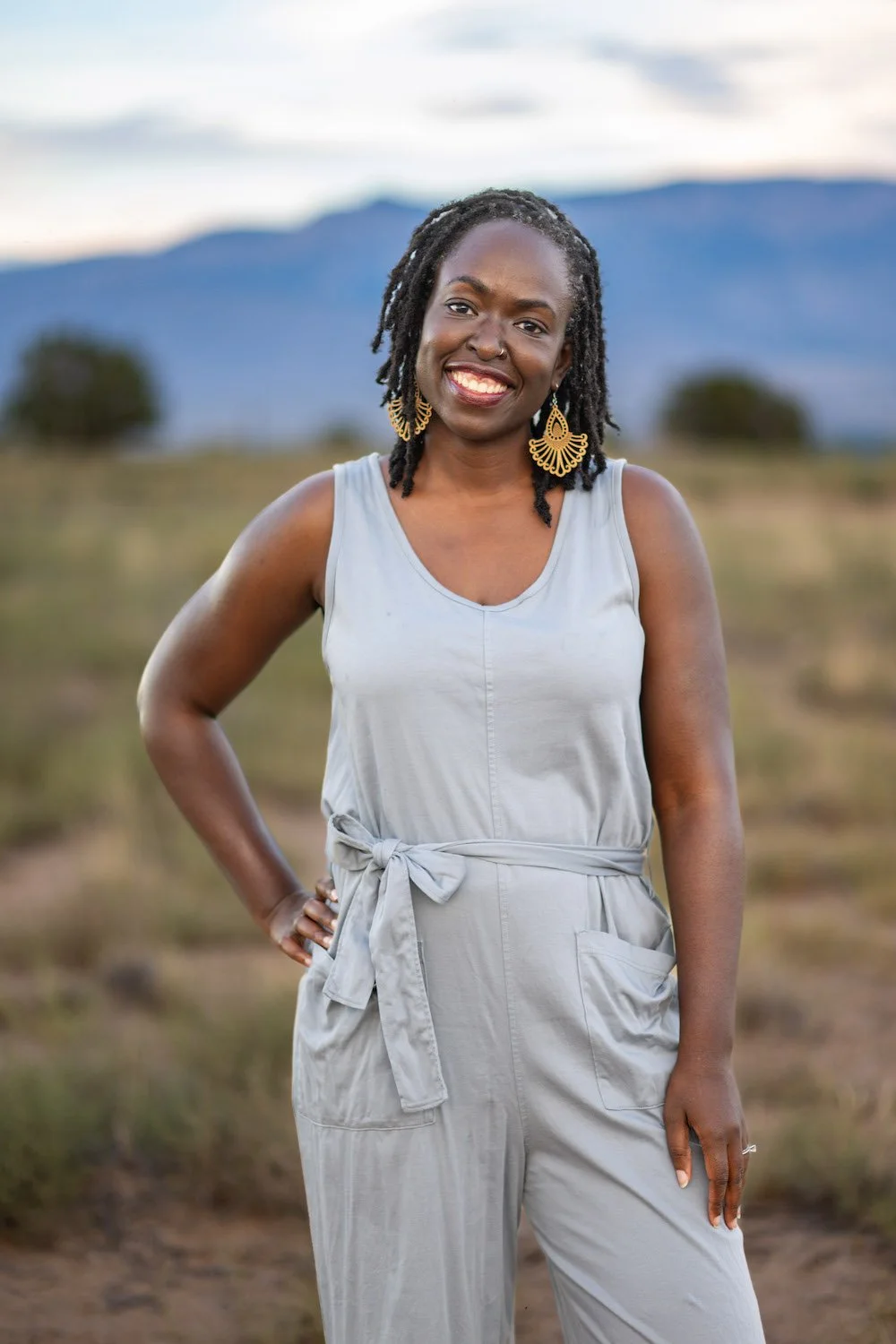
Meet Your Host!
Linda Sanderville, LCSW, RYT-200 is the founder of Satya Counseling & Yoga LLC. She specializes in concierge therapy for female founders and public figures, helping high-profile women navigate public scandal, executive burnout, and the values that will define the second half of life. Based in Albuquerque and serving clients virtually in DC, Maryland, Virginia, and beyond, Linda combines clinical expertise with somatic wisdom to help leaders reclaim their truth.
Interested in Working with a Corporate Wellness Therapist in Charlottesville, VA, Chevy Chase, MD or Fort Lauderdale, FL?
Is the inability to rest or slow down leading to burnout in your professional and personal life? Reclaim your joy and vitality while managing your professional commitments through holistic and evidence based counseling. Our specialized support at Satya Counseling & Yoga is designed to fit seamlessly into your busy life, empowering you to conquer trauma-based responses and thrive. Prioritize your mental well-being – embark on a transformative journey towards a happier and more fulfilling life by following these three steps to get started:
Schedule a complimentary 15-minute call to see if we’ll be the right fit.
Begin meeting with me, therapist and trauma-informed yoga teacher, Linda Sanderville, to rediscover your healthy, authentic self.
Start moving forward in your personal and professional life in a positive and healthy way!